
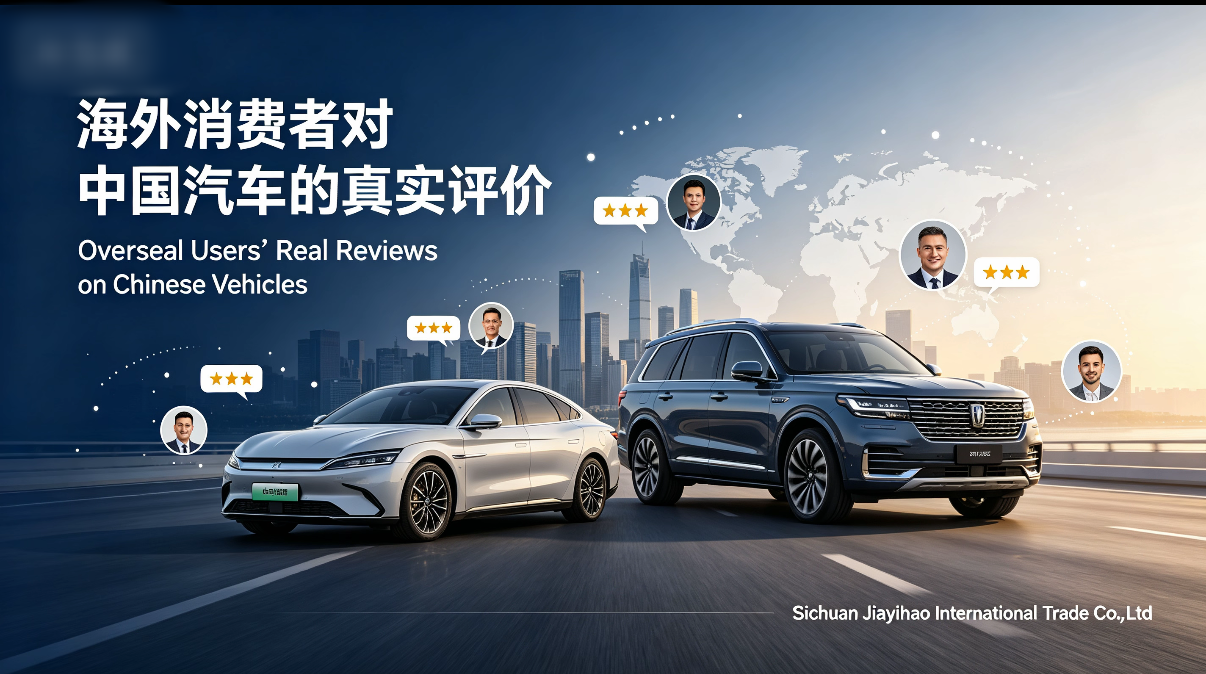
As Chinese auto exports keep expanding, more fuel vehicles and new energy models are delivered to countries all over the world. Overseas consumers have gradually changed their old stereotypes of Chinese cars after test drives and long-term daily usage. First-hand reviews from vehicle owners across regions serve as critical references for overseas dealers to select models and make purchasing plans. Sichuan Jiayihao International Trade Co.,Ltd specializes in complete vehicle export. We collect authentic feedback from owners in Europe, the Middle East, Southeast Asia, Africa and Latin America to objectively evaluate the global reputation of Chinese automobiles.
- Positive Feedback: Intelligent Features, Rich Configurations and Great Value for Money
The most recognized advantage mentioned by most overseas car owners is abundant factory equipment at a competitive price. Within the same budget, Chinese vehicles usually come with large touch screens, smart infotainment, seat ventilation & heating, panoramic sunroofs and ADAS as standard features. For many European, American, Japanese and Korean competing models, these functions are optional extras requiring extra payment.
EV owners frequently praise the outstanding performance of three-electric systems: reliable driving range, fast charging speed, smooth human-computer interaction and responsive voice control. Owners in the Middle East and Australia comment that Chinese SUVs offer spacious cabins with better-than-expected interior quality. Users from Africa and Southeast Asia note that Chinese fuel cars have solid chassis suitable for rough roads, and spare parts are affordable. Many overseas buyers state that Chinese vehicles deliver modern driving experience with lower upfront costs compared with legacy brands.
- Concerns Raised by Consumers: After-Sales Network, Resale Value and Localization
Besides positive reviews, overseas consumers also bring up practical worries that global auto dealers need to pay close attention to.
First, limited local service centers in certain regions. For some less popular export models, local repair workshops are insufficient and spare parts may take a long time to arrive.
Second, second-hand resale value. Compared with traditional brands that have occupied local markets for decades, Chinese cars still need improvement in residual value in some territories.
Third, localization details. Early exported models sometimes lack fully localized language settings and local map services. Vehicles sold to extremely cold or hot regions require climate adaptation modifications to achieve better performance.
- Different User Opinions across Global Regions
Driving conditions in different markets directly shape owners’ experience with Chinese cars.
Europe: Buyers focus on real EV range, safety certifications and assisted driving. European users recognize Chinese EV battery technology while prioritizing official local certification and long-term warranty.
Middle East: Consumers prefer large-size SUVs. Praise is mainly for powerful air conditioning and rich interior configurations; heat and dust resistance are key concerns.
Southeast Asia: Compact family cars and hybrids are popular. Local users care about fuel consumption, easy maintenance and total cost of ownership.
Africa: Vehicle durability, chassis clearance, purchase price and spare part cost are top priorities for car owners.
Latin America: Both fuel cars and budget EVs are in demand. Consumers pay attention to vehicle reliability and stable local spare parts supply.
- Shifting Consumer Perception
A few years ago, many overseas consumers held the stereotype that “Chinese cars are cheap with poor quality”. With real long-term driving experience and professional reviews from global automotive media, this bias is fading quickly. More owners share driving videos, mileage and energy consumption data on social platforms to prove the reliability of Chinese vehicles.
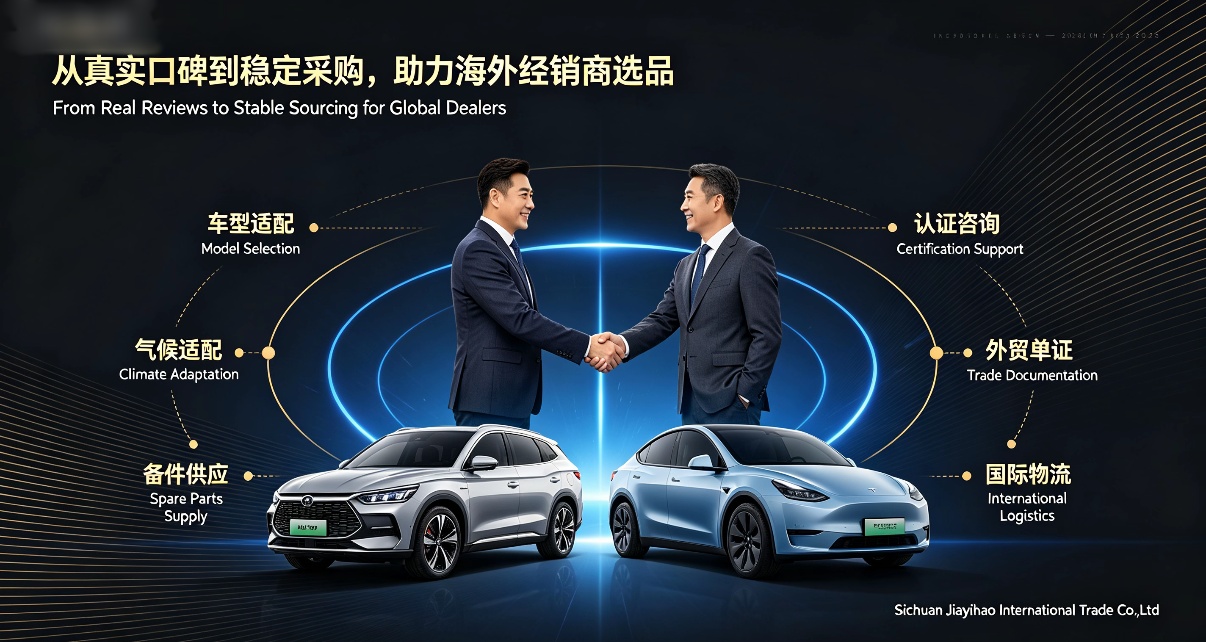
Nevertheless, brand reputation takes time to build. Product quality, local modification and spare parts system together determine long-term market acceptance. Overseas dealers partnering with trusted auto exporters can reduce procurement risks and deliver better sales and maintenance service to end customers. Sichuan Jiayihao International Trade Co.,Ltd can recommend region-suitable models, support regulatory modification and spare parts solutions to help dealers build good local reputation.
Conclusion
According to real reviews from global vehicle owners, Chinese vehicles stand out with rich configurations, advanced electrification technology and competitive pricing. Main weaknesses include limited after-sales coverage in some regions, residual value and incomplete localization. When sourcing vehicles, overseas dealers should select models based on local road conditions, climate and maintenance infrastructure. Supporting spare parts supply helps fully release the product strengths of Chinese automobiles.
Sichuan Jiayihao International Trade Co.,Ltd focuses on complete vehicle export. We provide one-stop services for global auto dealers including fuel and new energy vehicle sourcing, compliance modification, trade documentation and international logistics.