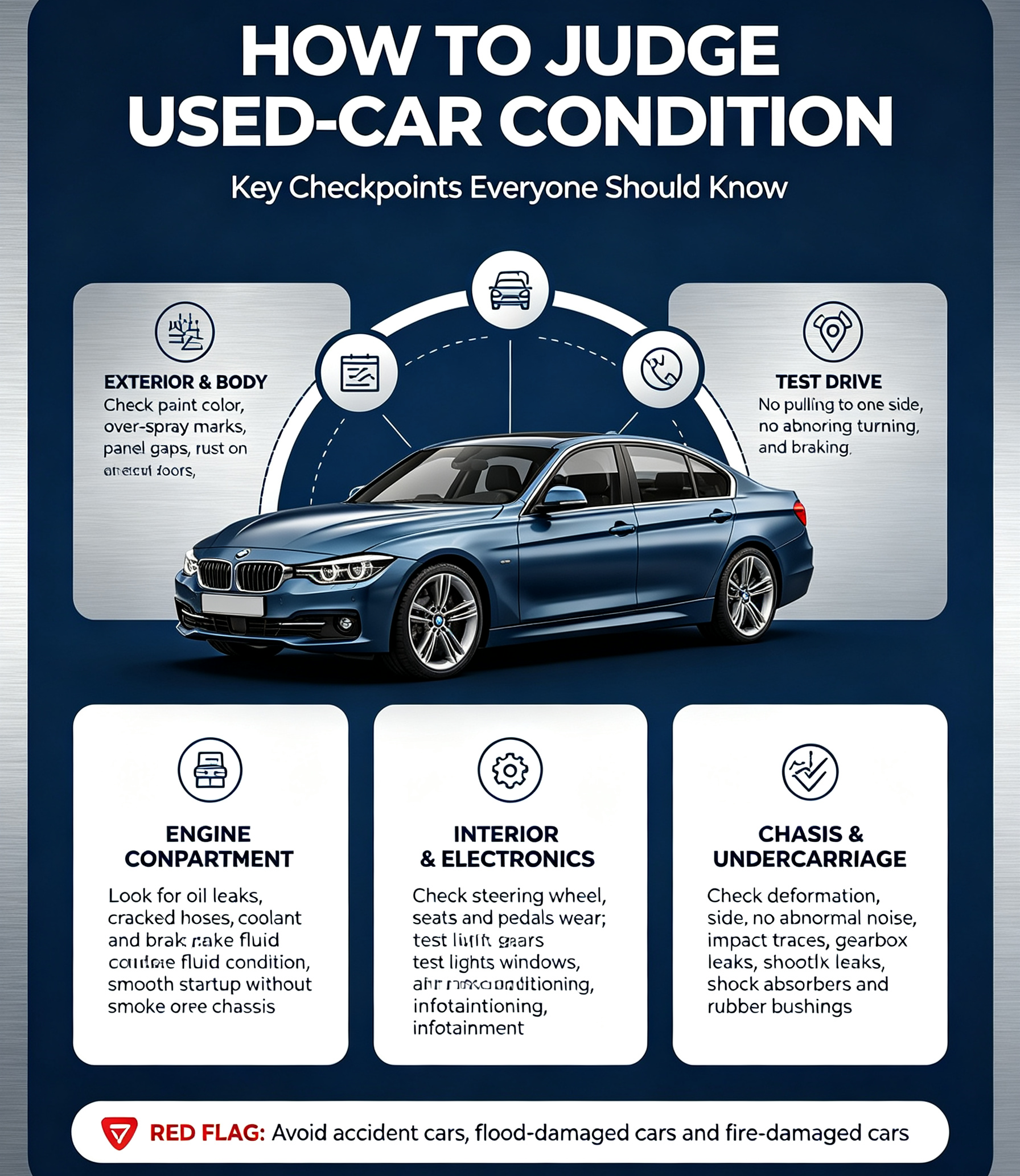
Buying a used car is popular across the global market. It can bring great cost‑performance for private buyers, while used‑car wholesale has become an important business segment for many overseas dealers. No matter you are purchasing for personal use or restocking for resale, learning basic vehicle‑inspection knowledge can help you avoid problematic cars.
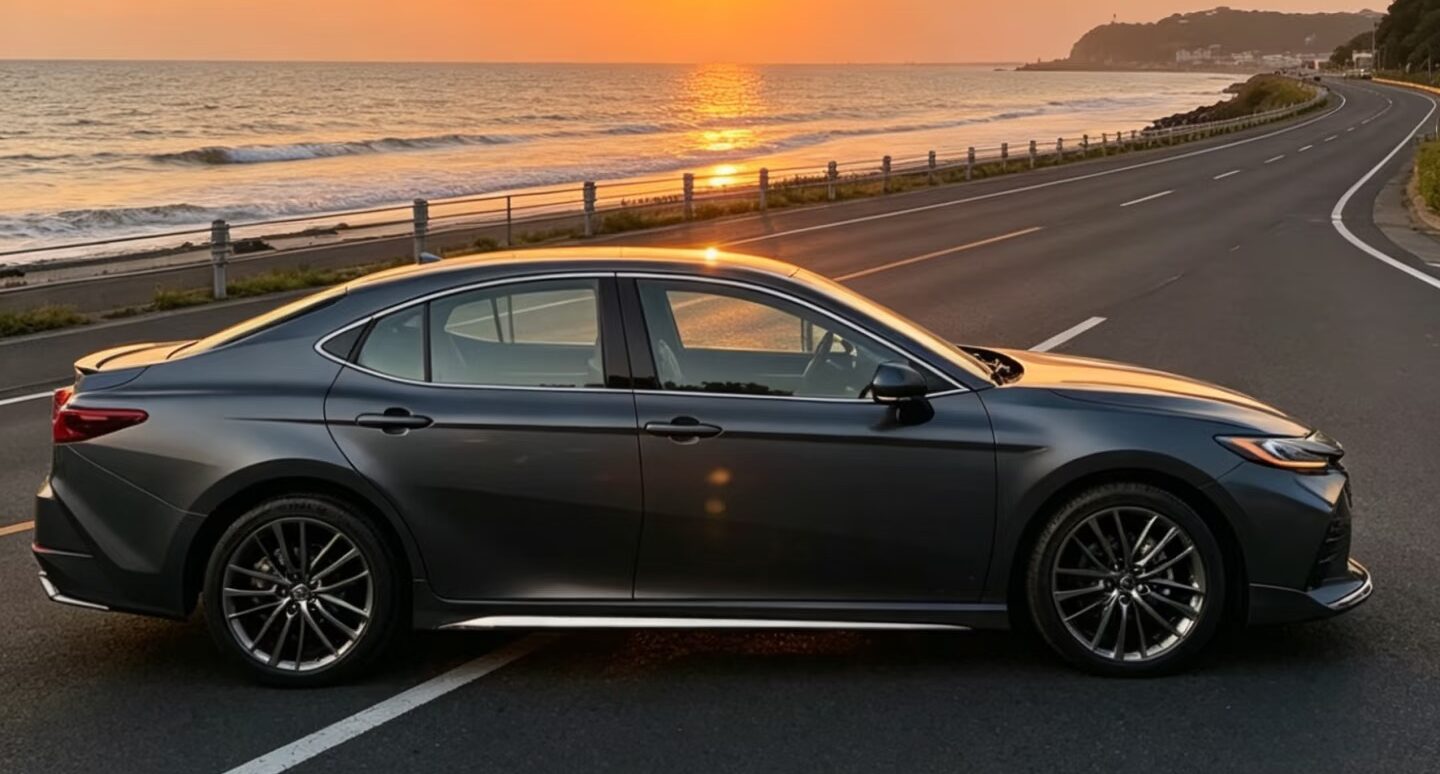
Exterior & Body Shell
Observe the whole body under natural daylight. Check for uneven paint color, paint over‑spray marks, inconsistent panel gaps between doors, fenders and hood. These signs may indicate collision repair.
Pay close attention to the bottom of doors, wheel arches and chassis edge. Rust spots will greatly reduce vehicle service life.
Engine Compartment
Open the hood. Look for oil leaks on engine surfaces, aging cracked rubber hoses.
Check the coolant and brake fluid status. The engine should run smoothly after startup, without heavy smoke, strange knocking or rattling noise.
Interior & Electronic Systems
Check wear degree of steering wheel, seats and pedals. Excessive wear may mean high mileage even if the odometer looks low.
Test all electrical devices: lights, windows, air‑conditioning, infotainment screen, wiper system. Faulty electronics will cause extra after‑sales troubles.
Test Drive Experience
During test‑drive, pay attention to steering stability. There should be no pulling‑to‑one‑side phenomenon.
Listen for abnormal noise when turning or braking. Gear shifting should be smooth for automatic models. Manual‑transmission vehicles should shift without stuck or grinding sound.
Chassis & Under‑carriage
If possible, lift the car to inspect the undercarriage. Check for heavy deformation, impact traces, oil leakage from gearbox and suspension parts.
Suspension shock absorbers should not leak oil. Worn rubber bushings will produce bumping noise while driving.
⚠️ Warning: Avoid accident cars, flood‑damaged cars and fire‑damaged cars
- Accident car: Structural frame is deformed after heavy crash, safety performance drops permanently.
- Flood car: Water invades wiring harness and electronic modules, hidden failures will appear later.
- Fire‑damaged car: Burnt wiring brings huge safety risks.