
Many drivers only go for wheel alignment when their car pulls to one side or tires wear abnormally. In fact, bumping curbs, hitting potholes or heavy loading can change chassis geometry parameters. Incorrect wheel alignment brings tire wear, poor handling and higher fuel consumption. Knowledge valuable for private car owners and overseas auto dealers.
What is wheel alignment Wheel alignment adjusts suspension and steering components to restore factory‑specified angles of wheels relative to vehicle body and road surface.
Main four core angles: Camber, Caster, Toe‑in / Toe‑out, Thrust angle.
Camber Tilt angle of wheel viewed from front. Top tilting inward = negative camber; top tilting outward = positive camber. Improper camber leads to one‑side tire tread wear. Caster Forward‑backward tilt of steering kingpin. It affects steering return force and straight‑line stability. Wrong caster will cause poor centering and pulling‑to‑side. Toe‑in / Toe‑out Viewed from top: front end of wheels slightly closer = toe‑in; front end apart = toe‑out. Incorrect toe value causes feather‑edged tire wear. Thrust angle Angle between actual driving direction and vehicle central axis. Bad thrust angle makes the car “crabbing”, driving slightly sideways.
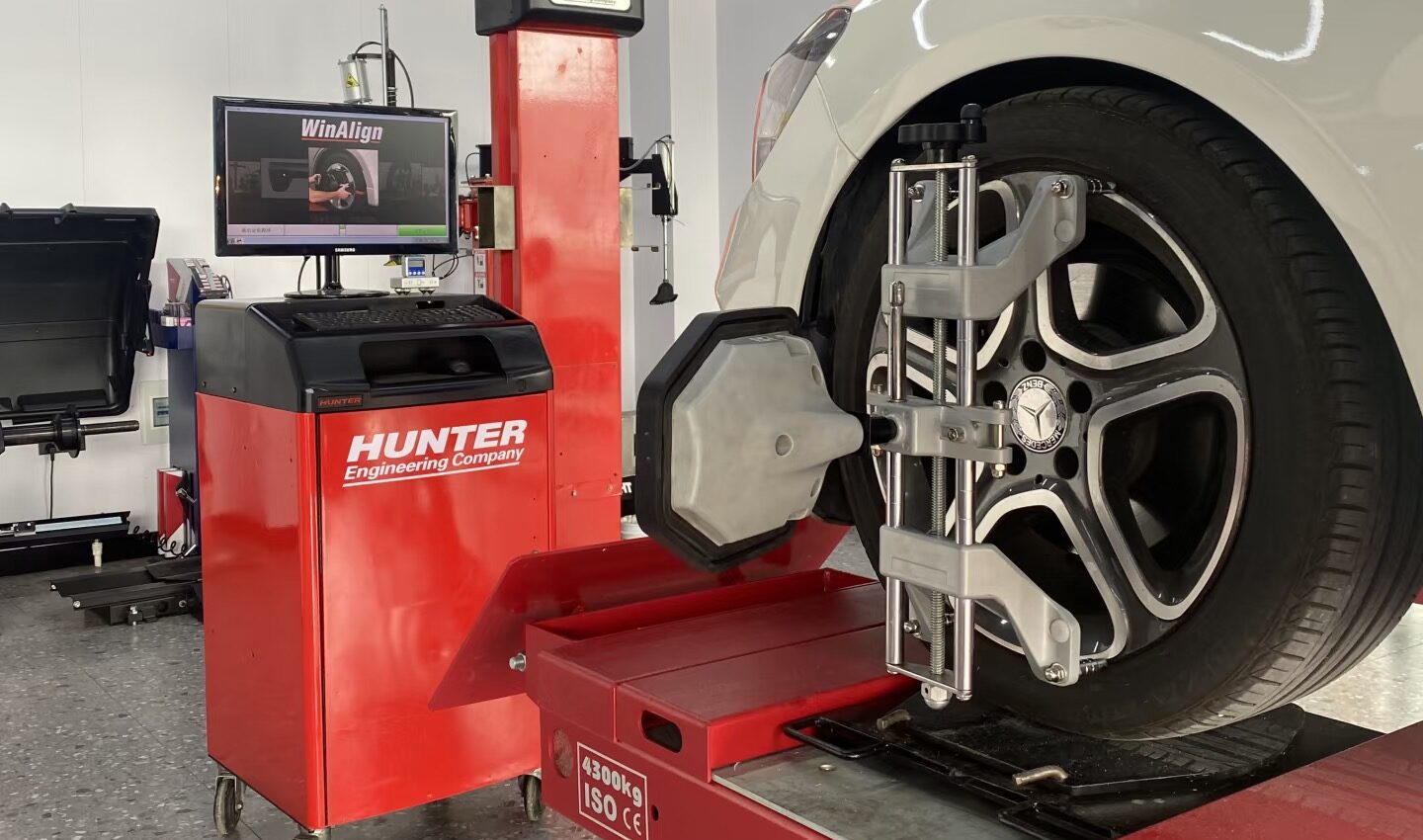
When do you need wheel alignment ✅ Recommended scenarios:Tire shows abnormal uneven / feather‑edge wearAfter hitting deep potholes, curbs or heavy collisions on chassisAfter replacing suspension parts: control arms, tie rods, shock absorbersObvious pulling‑to‑one‑side while driving straightSteering wheel is tilted while car travels straight ❌ Situations that do NOT need alignment:No pulling, no abnormal tire wearRoutine tire replacement onlySimple tire rotation
Important distinction: Wheel alignment ≠ wheel balancing
Wheel balancing solves steering‑wheel shake at high speed.
Wheel alignment solves pulling and abnormal tire wear.
❌ Every time you service the car, you should do wheel alignment.
Unnecessary frequent alignment may alter original factory good parameters. Only perform when symptoms appear or after chassis impact.
❌ After alignment finished, problem is 100 % fixed.
If suspension components are bent or worn, alignment cannot compensate damaged parts. Worn parts must be replaced first.
Wheel alignment maintains original chassis geometry. It protects tires and guarantees stable driving performance. It is not a routine maintenance item, but a repair measure for abnormal conditions.
As a professional automobile export enterprise, we inspect chassis and tire conditions for each exported vehicle. We ensure good driving posture for global private buyers and dealer partners.